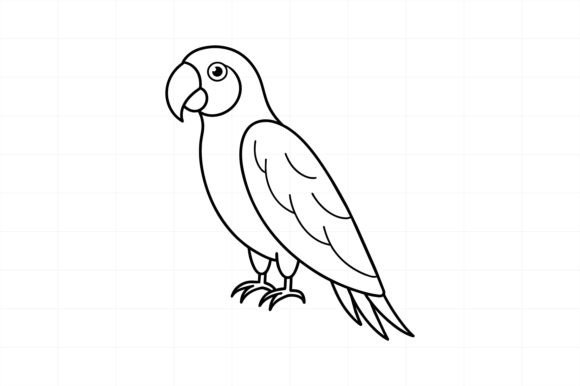
A Parrot Line Art Illustration for Embroidery Projects
When I first open a new embroidery file, my mind immediately starts picturing it stitched out on fabric. It’s not just about the image on screen; it’s about how it will live as a finished product. So, looking at this Parrot Line Art Illustration, my designer’s eye is evaluating its potential on a hoop, on an item, and ultimately, in a customer’s hands.
The Personality of This Parrot Design
The design has a friendly, whimsical character. The line art style is clean and open, which is a fantastic starting point for embroidery. It avoids overly dense detail, meaning it won’t become a stiff, heavy patch of stitches on lighter fabrics like a baby’s cotton tee. The illustration feels playful and approachable—it’s not a strict, realistic portrait but a charming graphic. That mood points directly towards projects meant to delight: personalized gifts, nursery decor, cheerful kitchen towels, or boutique-style tote bags.
Where This Design Shines in Real Projects
In practical use, this parrot’s open lines translate well to a variety of items. I can easily envision it as a standout feature on a relaxed-fit sweatshirt, where the satin stitch outlining the shape would provide a lovely, smooth texture against the fleece backing. On a canvas tote bag, it would become a durable, artistic accent. For a craft business focusing on baby items, this parrot could be beautifully stitched onto a blanket corner or a little cap, becoming a gentle, handmade touch.
Its clarity also makes it a strong candidate for an embroidered patch. You could stitch it onto twill, trim it, and apply it to aprons, backpacks, or even holiday gifts like personalized stockings. For small shop merchandise, this kind of recognizable, cheerful motif helps build brand consistency across a line of products—think parrot-themed tea towels, pillow covers, and apparel in an Etsy store.
Navigating the Practical Embroidery Considerations
Every design has its sweet spots and its caution zones. With this line art illustration, the stitch density should naturally be manageable, but you must pay attention to the smaller details. The curves of the tail feathers or the potential tiny interior lines will require a proper hoop size and good stabilizer to stitch cleanly, especially on stretchy fabrics like t-shirts. On a curved surface like a cap, you’d need to ensure the design layout fits the arched area without distorting the parrot’s pleasing shape.
Fabric choice is key. On dark fabric backgrounds, you’ll need to be thoughtful about thread color contrast. A white or bright thread for the entire line art might pop perfectly, but sometimes reversing the concept—using a dark thread on light fabric—can offer a sophisticated look for boutique products. Textured fabrics like linen can add a lovely handmade presentation, but they may require testing to ensure the lines don’t break up.
A Real Scenario: Crafting a Boutique Kitchen Towel
Let’s walk through a real case. I’m preparing a set of embroidered kitchen towels as gifts for a client’s small shop. I select a high-quality, light-colored linen towel. This parrot design, with its joyful theme, fits perfectly. I’ll test it on a scrap of the same linen first. I’m checking that the running stitch or fill stitch paths (depending on the file’s construction) don’t pull the fabric and that the overall size is proportionate—not too large to overwhelm the towel, not too small to lose impact. After stitching, the clean lines result in a crisp, professional-looking finish that elevates the towel from ordinary to a valued handmade product. It’s exactly the kind of detail that boosts customer trust and buyer engagement in an Etsy listing.
Designer Notes for a Successful Project
Before committing this design to a final project, here are my ingrained steps:
- Always test on scrap fabric first. This reveals how the machine embroidery design interacts with your specific material and stabilizer combination.
- Check thread colors against your final fabric. View the stitched test piece in both natural and indoor light.
- Review the design in black and white mockups. This helps assess its form and clarity stripped of color, which is crucial for understanding its versatility.
- Confirm the licensing terms. The product description suggests broad use, but for commercial embroidery projects where you’ll sell the finished product or digital product previews, you must have explicit confirmation that the digital embroidery file is licensed for such use.
- Consider the product’s lifecycle. For items needing frequent washing, like apparel or tea towels, ensure your stitch choices and stabilizer use will hold up over time.
Final Thoughts on Visual Appeal and Value
This Parrot Line Art Illustration succeeds because it is adaptable and carries a positive visual personality. For embroidery designers and craft businesses, that adaptability means one embroidery file can serve multiple markets: children’s items, home decor, custom apparel, and personalized gifts. When stitched well, it conveys a sense of care and craftsmanship. It doesn’t try to be everything; it’s a well-defined graphic from the Illustrations category that knows its role. That focus makes it a reliable design asset in your toolkit, one that can help turn a simple sweatshirt or tote into a product with genuine giftability and recognition. In the end, a design’s true test is on the hoop and in the hands of someone who appreciates the art of the stitch—and this parrot is ready for that flight.